
International passengers departing from the Rajiv Gandhi International Airport at Hyderabad from April 23 onwards will have to pay Rs 1,000 ($25) towards user development fees (UDF). Announcing this in a statement, the new airport developer -- GMR Hyderabad International Airport Limited -- said that the fees would be collected with the approval of the ministry of civil aviation.
GMR Hyderabad International Airport Ltd, the consortium operating the new Hyderabad airport, has offered to halve ground-handling charges even as the civil aviation ministry allowed the domestic carriers to undertake their ground-handling till January 1, 2009. This will give the two sides enough time to resolve the contentious issue, which almost jeopardised the opening of the new airport and forced a postponement once.
GMR Hyderabad International Airport (GHIAL) has developed the Rajiv Gandhi International Airport at Shamshabad ahead of schedule, but the company officials are not in a position to tell when the new facility will commence commercial operations even three days after its inauguration.It is learnt that most of the private airlines, including domestic and international carriers, are yet to enter into an agreement with the new airport's two ground handlers.
DIAL, the GMR-led consortium modernising Delhi airport, had projected it would get only a Rs 800 crore-Rs 1,000 crore deposit for the entire 45 acre land in the hospitality district, leaving a gap in funding for the modernisation plan. The aviation ministry allowed it make up the shortfall by levying an ADF on passengers. With DIAL managing to persuade bidders for the hospitality district to increase security deposits by close to 50 per cent, the ADF may now be reduced.

The UPA Government is trying to push through the second wave of airport privatisation before the elections and the controversial elements of this process threaten to harm the sector.
Aviation Minister Praful Patel's outburst against Planning Commission Deputy Chairman Montek Singh Ahluwalia is perhaps not difficult to understand since most people think it was actually Patel who should have been keeping an eye on the delays at the Delhi airport.
The airport had asked for a UDF of at least Rs 600 from domestic passengers travelling out of Andhra Pradesh. For passengers travelling within the state, it had demanded a user fee of Rs 350. UDF is the fee levied at the airport on departing passengers to enable the airport developer bridge the gap between expenditure and admissible revenue as stipulated by the ministry guidelines.
Company working on 'win-win' solution.
The finance ministry has opposed the proposed airport at Greater Noida, and has instead favoured upgrading infrastructure at Delhi airport, which it says makes more economic sense. This has come as a shot in the arm for the GMR group, the private sector developer of Delhi airport, which has been opposing another airport so close to the existing one.
In fact, it is estimated that by 2026, over one-third of Delhi's total projected traffic (82.7 million) will be diverted to Greater Noida airport (28.4 million), and by 2036 when DIAL expects to handle nearly 100 million traffic, Greater Noida will attract 82.7 million passengers.
Overlooking opposition from the Left parties and airport employees, the government on Tuesday signed two agreements to set up joint venture companies between Airports Authority of India and the GMR and GVK groups.
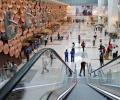
UP government renews proposal for one at Jewar, 100 km from Delhi
Strangely, a few days after filing the charges, the CBI teams arrived in Hyderabad and Mumbai to raid GVK's offices and found incriminating evidence, a reversal of the normal course of events.

'Industry observers are certain the next attempt will succeed even if they have to browbeat someone into buying as the government has put its might behind it,' predicts Anjuli Bhargava.

GMR-led Delhi Airport had accepted the government's request to shift UDAN flights to Hindon Air Force Base, but airlines say poor last mile connectivity will have to be dealt with first before starting operations

The government is considering setting up air freight stations to enable direct movement of vaccines from pharmaceutical factories to the aircraft.

With six airports handed over to the Adani group for 50 years, the government is now all set to hand over another 25 airports to private players in a bid to 'monetise' them. Official figures reveal that since 2017-18, the government has spent and will be spending Rs 14,500 crore on significantly revamping infrastructure at most of these airports before handing them over to private players. The Airports Authority of India (AAI), which operates these airports for the government, has spent billions of rupees in building new terminal buildings, runways, reinforcing taxiways, upgrading aircraft landing systems, radars and a host of other heavy duty and capital intensive infrastructure works.

The ones chosen for operation, management and development through a public-private partnership model are Lucknow, Ahmedabad, Jaipur, Mangaluru, Thiruvananthapuram, and Guwahati.

This is part of the initiatives that the ministry is undertaking to use technology in order to make airport check-in seamless and formation of a no-fly list.

One reason is that airlines have ramped up capacity and expanded their presence in tier-II markets. The first of a three-part series analyses how the aviation industry is an outlier in the midst of an overall economic slowdown.

Apart from the Adani group, the Tata group, the Hinduja group, Indigo and a New York-based fund, Interups, are expected to submit EoIs.

The first Airbus A-320 aircraft of Tata-SIA joint venture Vistara airline, painted with its logo and livery, landed at the IGI Airport in New Delhi on Wednesday, taking the carrier a step closer to its launch.

Ajit Mishra, vice president, Research, Religare Broking, answers your queries.

The regulator has been facing criticism from aviation experts who believe it has been lenient on the issue.

'JRD Tata was a visionary who established civil aviation in India'.

The charges for security component of passenger service fees will not increase much and a passenger may have to bear an extra of Rs 50

Jet Airways on Thursday said it would introduce more flights on both its domestic and international networks.

Bengaluru and Delhi airports had the fastest growth in passenger traffic in 2016 among global peers.

Union says move to privatise four more airports violates Tripartite Panel recommendations that govt accepted long back

Union ministry of home affairs changed its mind and gave bid clearance for Hiranandani Developers and its consortium partner, Zurich Airport

The project cost was pegged at Rs 4,766 crore (Rs 47.66 billion).
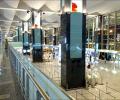
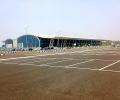
Court documents show that the Kerala government, whose case was treated as the 'lead case' among all the petitions filed against Adani, made four allegations to convince the court to cancel the contract for the Thiruvanathapuram airport. The state's legal team couldn't substantiate most of these allegations with documentary proof and its self-defeating arguments in court failed to convince the judges to cancel the contract given to Adani. The battle for the Thiruvananthapuram airport between the Communist-led Kerala government, the Adani group and the Modi government over the past year hasn't had a dull moment since the proceedings began. Claims of a smoking gun turned out to be a damp squib, says Sai Manish.

The fairy tale turnaround story has, however, taken a few knocks after a second wave of the pandemic has brought a series of default notices and has posed the toughest test for the 55-year old Singh to save the airline he founded and sold to the Marans only to assume control later.
Firms are still barred from holding board positions in the special purpose vehicle that will develop the airport.

It is likely the airports - Chennai, Kolkata, Kochi, Pune, Ahmedabad, Jaipur, Lucknow and Guwahati - will be bid out for 30 years and the tariffs will be fixed upfront.

Stressful work schedules and limited growth opportunities are taking a toll on a large number of senior professionals in airlines.
Who is to take their place? Will a new generation of entrepreneurs start up with better business sense, or at least better luck? But the so-called unicorns are mostly copy-cat entrepreneurs whose cash flow is funded by overseas (including Chinese) money, notes T N Ninan.

This is the second extension for the bids since June 18.

A ministry spokesperson said he wasn't aware of the development.
 © 2026 Rediff.com - Advertise with us - Disclaimer - Privacy Policy - Sitemap - Feedback - About us - Terms of use - Grievances